Sports rehabilitation: stem cell therapy in Istanbul
Book a consultationStem cell therapy for sports injuries in Istanbul: fresh Wharton's jelly stem cells plus exosomes, designed to support the healing of tendons, ligaments and muscles as part of your sports rehabilitation.

Stem cell therapy for sports injuries: what it can do for you
Tendons, ligaments and muscles take a beating in sport, whether you play tennis on Sundays or train for a marathon. Many injuries heal with rest and physiotherapy, but some linger: tendinopathy that flares with every comeback, a partial tear that stays weak, a muscle that keeps tearing in the same place. Stem cell therapy for sports injuries is designed to support healing of that tissue as part of your rehabilitation, not instead of it.
In a 90-patient comparison, all 45 rotator cuff repairs boosted with the patients' own bone marrow stem cells had healed by six months, against 30 of 45 without; ten years later, 39 versus 20 were still intact [1]. In a double-blind trial in 20 active patients with patellar tendinopathy, MSC injections restored tendon structure on MRI more than platelet-rich plasma (PRP) did [2].
Uzm. Dr. Cihan Bolat, MD, anaesthesiologist and stem cell specialist with 20 years of experience, treats sports injuries at our clinic in Suadiye, Kadıköy, Istanbul, Turkey. We use fresh Wharton's jelly mesenchymal stem cells (MSCs) and exosomes from donated umbilical cords, and no performance-enhancing substances. Our team has completed more than 10,000 procedures over more than a decade.
Choose a topic
Key facts
Your sports injury treatment at a glance.
- What we use
- Fresh Wharton's jelly MSCs, combined with exosomes from the same umbilical cord tissue
- Cells
- From 50 million MSCs, from screened, donated cords (newborn tissue); never fetal cells
- How it is given
- Set in your personal plan, depending on the injured tissue and your scans
- Treatment
- Dose and sessions set in your personal plan, fitted around your rehabilitation
- Price
- From USD 5,000 for 50 million MSCs (IV or injection into two joints); exact price in your written quotation
- Who it is for
- Active people with slow-healing tendon, ligament, muscle or joint injuries
How stem cells support healing after a sports injury
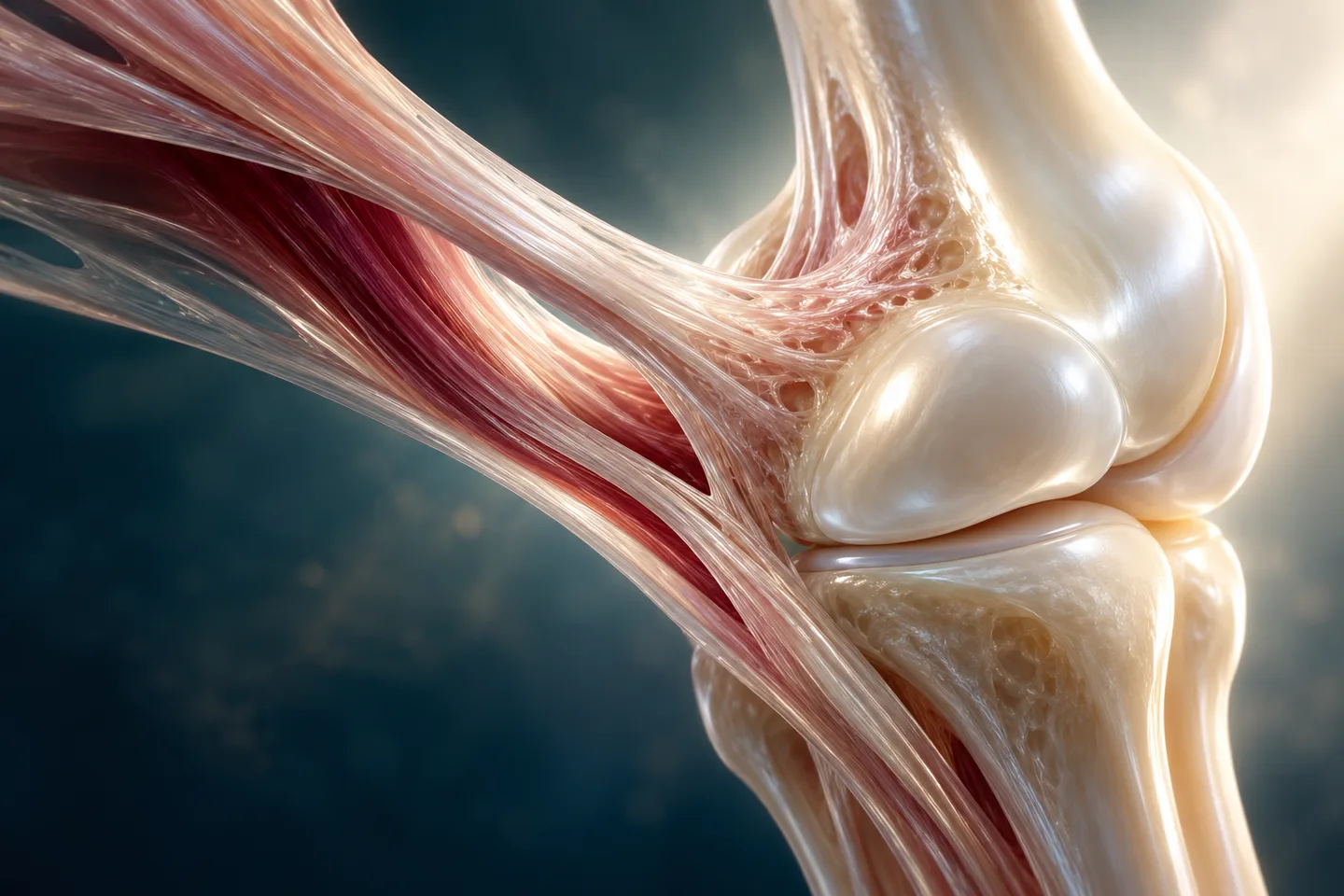
Tendons and ligaments have a poor blood supply, so they heal slowly and often with weaker scar tissue. At the injury, MSCs act as a source of repair signals: they calm inflammation, attract new blood vessels and encourage the tissue's own cells to rebuild organised fibres.
- More cells, better healing: in rotator cuff repair, the shoulders that tore again within ten years had received fewer MSCs than those that held [1].
- A matching scaffold: under the electron microscope, the collagen matrix of Wharton's jelly resembled that of the rotator cuff tendon [3].
- Less scarring: in rats with a muscle injury, Wharton's jelly MSCs and the factors they secrete left less scar tissue [4].
Sports rehabilitation
Explore your topic. Discuss your questions and personal circumstances with us.
Discuss your situationWhat the research shows for tendon, ligament and muscle injuries
Human studies have used the patient's own bone marrow cells, donor Wharton's jelly tissue or the signals released by donor umbilical cord MSCs; umbilical cord cells and exosomes have also been tested in animals. The main results:
- Rotator cuff repair, 90 patients, case-controlled: 45 received their own concentrated bone marrow MSCs during arthroscopic repair. All 45 had healed at six months versus 30 of 45 controls; at ten years, 39 (87%) versus 20 (44%) still had an intact cuff [1].
- Rotator cuff tears, 87 patients who had failed at least eight weeks of conservative treatment, retrospective: 2 ml of donor Wharton's jelly tissue applied to the affected tendon caused no reported adverse reactions, and all patient-reported scales improved significantly by day 90 [3].
- Chronic patellar tendinopathy, 20 active patients, double-blind randomised: 20 million of their own bone marrow MSCs versus PRP, both with rehabilitation. Pain and function improved in both groups; tendon structure improved more on ultrasound and MRI with MSCs [2].
- Posterior cruciate ligament tears (grade 1–2), 12 patients, single group: secretome from donor umbilical cord MSCs, the proteins and vesicles these cells release, given during keyhole surgery. After one year, knee function scores averaged around 90 out of 100, and five patients had returned to competitive sport after an average of 25.8 weeks [5].
- Tendon disorders, systematic review of 22 studies with 658 patients: almost all reported no serious side effects, and cell injections showed benefit in rotator cuff, elbow, patellar, Achilles and gluteal tendons [6].
Why fresh Wharton's jelly stem cells
For an athlete, a harvest is one more wound to recover from. Wharton's jelly MSCs come ready from the donated umbilical cord of a healthy newborn, multiply faster in the lab than bone marrow or fat cells [7], and leave you free to focus on rehabilitation.
| Fresh Wharton's jelly MSCs (our cells) | Cells from your own fat or bone marrow | |
|---|---|---|
| Age of the cells | Newborn tissue | As old as you are |
| Origin | Umbilical cord donated after a healthy delivery | Bone marrow aspiration from the pelvis, or liposuction |
| Growth in the lab | Faster than bone marrow or fat cells [7] | Slower |
| Recovery from harvest | None needed | A puncture or liposuction wound to heal |
What exosomes add
Exosomes are nano-sized packages released by stem cells, carrying proteins and genetic messages but no cells. We add them to amplify the repair signal at the injured tissue.
In 12 sheep with a shoulder tendon injury, one dose of umbilical cord MSC vesicles on a collagen sponge improved tendon-to-bone healing after six weeks, and MRI suggested less inflammation [8]. In rats, the factors secreted by Wharton's jelly MSCs reduced muscle scarring like the cells did and scored better on tissue analysis [4]. In people, factors secreted by umbilical cord MSCs have already been used in tears of the posterior cruciate ligament [5]; trials with exosomes alone are still to come, so for now exosomes support the cells, not replace them.
Who is a good candidate for stem cell therapy for sports injuries?
The specialist decides from your scans and injury history and tells you straight if the treatment is not right for you.
Often suitable
- Tendinopathy of the Achilles, patellar tendon, rotator cuff or elbow
- Sprains and partial ligament tears that stay painful
- Muscle tears that heal slowly or keep recurring
- Support after surgery such as a rotator cuff repair
Assessed case by case
- A complete tendon or ligament rupture, which often needs surgery first
- Cartilage or meniscus damage alongside the injury
- Competitive athletes subject to anti-doping rules
- Blood-thinning medication or a known clotting problem
Not suitable
- Active cancer, or a cancer diagnosis in the past five years
- An infection at or near the injured area
- Pregnancy, or while breastfeeding
- An injury not yet examined, so a fracture or full rupture has not been ruled out
Your treatment in Istanbul, step by step
From your first message to your return to training, one team supports you; you get a reply within 48 hours.
- Step 1.
Specialist assessment
Send us your age, sport and level, how the injury happened, treatments so far, and your ultrasound or MRI report. The specialist reviews them personally.
- Step 2.
Free phone consultation with the specialist
If you are suitable, you discuss your goals and questions, then receive your personal plan and written quotation.
- Step 3.
Stem cell preparation
Paying the deposit starts preparation, and your cells and exosomes are ready for your date in 5–10 days.
- Step 4.
Treatment day
Our driver takes you from anywhere in Istanbul to our clinic in Suadiye, Kadıköy, and back, free of charge. The specialist gives your treatment as set in your plan.
- Step 5.
Follow-up
Our follow-up team keeps in touch as you work through rehabilitation with your physiotherapist and build back up to training.
What does stem cell therapy for sports injuries cost?
Treatment starts from USD 5,000 for 50 million MSCs (IV or injection into two joints). The final amount depends on the injury, the number of sites treated, the cell dose and the exosomes added. You see the exact price in your written quotation before you pay.
- Included: the specialist's assessment and treatment, the cells and exosomes in your plan, free transport on treatment day, a personal contact and follow-up
- Not included: flights, hotel, scans and physiotherapy at home
Frequently asked questions
Is your question not listed? The specialist will be glad to answer it.
Ask your questionIs stem cell therapy a cure for sports injuries?
When can I return to sport after treatment?
That depends on the injury and your rehabilitation, not on the cells alone. In the cruciate ligament study with signals from umbilical cord MSCs, five patients were back in competitive sport after an average of 25.8 weeks [5]. Your physiotherapist guides your step-by-step return to training.
I compete. Is stem cell treatment allowed?
Check the current rules with your federation or national anti-doping organisation before treatment, as rules on cell-based treatments can change. Our clinic uses no performance-enhancing substances.
Which sports injuries can be treated?
Mainly soft-tissue injuries: tendinitis and tendinopathy, partial tendon and ligament tears, sprains and muscle tears, as well as joint problems and slow-healing fractures. The specialist judges each injury individually.
Is stem cell therapy for sports injuries safe?
In a review of 22 tendon studies with 658 patients, almost all studies reported no serious side effects or immune reactions after cell injections [6]. Across 62 randomised trials with 3,546 participants, MSCs caused only short-lived effects such as temporary fever, fatigue or reactions at the injection site [9].
How much does stem cell therapy for sports injuries cost in Turkey?
Treatment in Istanbul starts from USD 5,000 for 50 million MSCs; your written quotation gives the exact price. Your Dutch health insurer will not necessarily reimburse it, so check before you book.
References
Studies cited on this page.
- Hernigou P, et al. Int Orthop 2014. Biologic augmentation of rotator cuff repair with mesenchymal stem cells during arthroscopy improves healing and prevents further tears: a case-controlled study.
- Rodas G, et al. Am J Sports Med 2021. Effect of autologous expanded bone marrow mesenchymal stem cells or leukocyte-poor platelet-rich plasma in chronic patellar tendinopathy (with gap >3 mm): preliminary outcomes after 6 months of a double-blind, randomized, prospective study.
- Lai A, et al. Biomedicines 2024. Safety and efficacy of Wharton's jelly connective tissue allograft for rotator cuff tears: findings from a retrospective observational study.
- Pereira T, et al. Stem Cells Int 2014. Effects of human mesenchymal stem cells isolated from Wharton's jelly of the umbilical cord and conditioned media on skeletal muscle regeneration using a myectomy model.
- Rhatomy S, et al. Eur J Orthop Surg Traumatol 2023. Allogeneic umbilical cord mesenchymal stem cell conditioned medium (secretome) for treating posterior cruciate ligament rupture: a prospective single-arm study.
- Mirghaderi SP, et al. J Exp Orthop 2022. Cell therapy efficacy and safety in treating tendon disorders: a systemic review of clinical studies.
- Amable PR, et al. Stem Cell Res Ther 2014. Protein synthesis and secretion in human mesenchymal cells derived from bone marrow, adipose tissue and Wharton's jelly.
- Jenner F, et al. Am J Sports Med 2023. Evaluation of the potential of umbilical cord mesenchymal stromal cell-derived small extracellular vesicles to improve rotator cuff healing: a pilot ovine study.
- Wang Y, Yi H, Song Y. Stem Cell Res Ther 2021. The safety of MSC therapy over the past 15 years: a meta-analysis.
Your first question is enough.
Ask about the treatment, costs or your journey. We can discuss what your next step might be.